

Dark Patterns in 2026: How Manipulative UX Hurts SEO, Trust, and Conversions
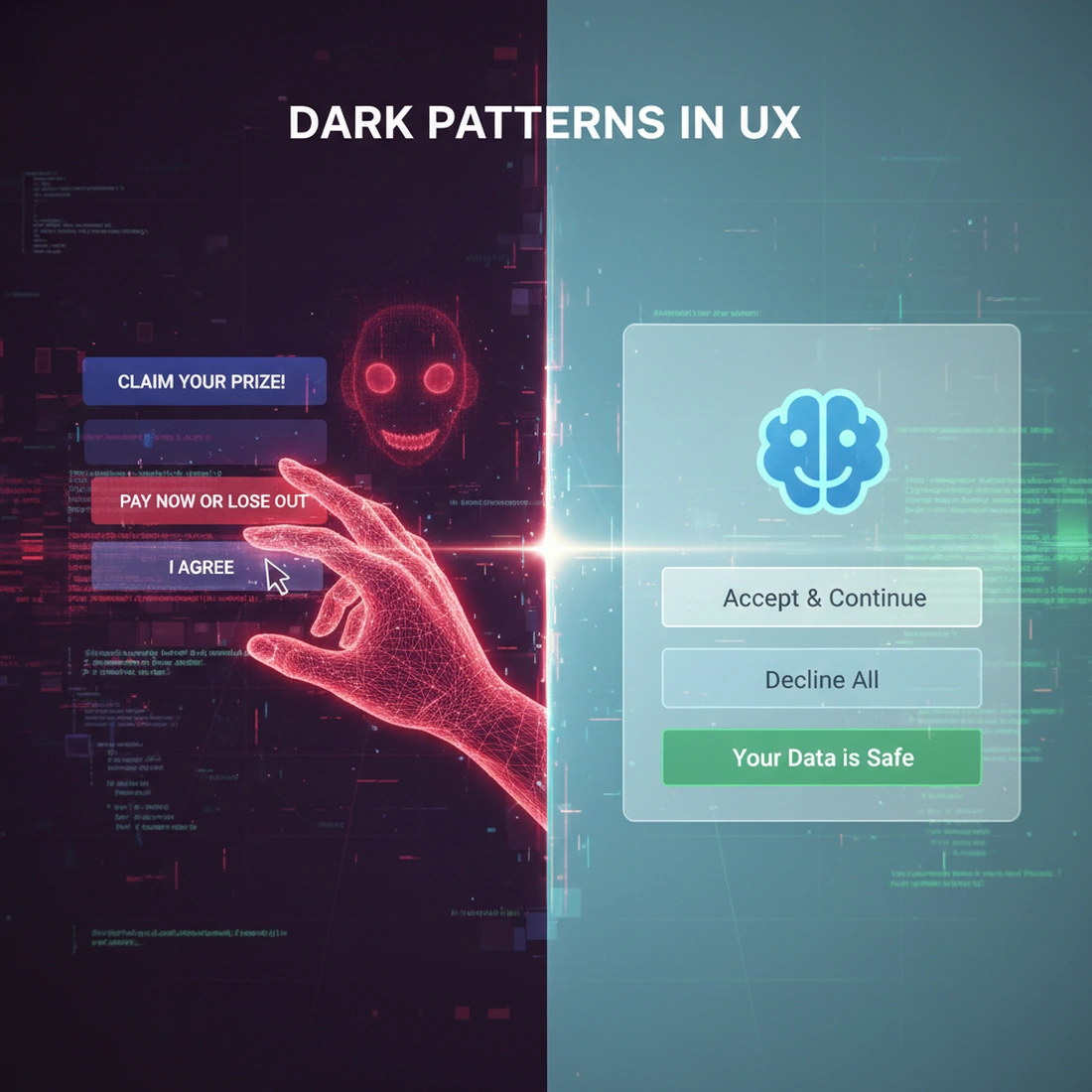
In 2026, the line between “effective sales” and “manipulation” has become extremely thin. Users raised in the era of ubiquitous artificial intelligence can instantly recognize techniques designed to push them into decisions they don’t actually want to make. Dark patterns are no longer just annoying pop-ups — they are a strategic mistake that damages your SEO and your conversion metrics (LTV).
What should you avoid? The most dangerous Dark Patterns in 2026
1. “AI Gaslighting” and fake personalization
In the age of advanced language models, creating an artificial sense of personal connection is easy — but risky.
- What to avoid: Chatbots pretending to be human specialists and pressuring users to provide personal data under the guise of “expert analysis.”
- Ethical alternative: Clear communication: “You are chatting with an AI assistant.”
2. Confirmshaming
This technique relies on wording messages in a way that makes users feel guilty or foolish for declining an offer.
- Example: A button saying “No thanks, I prefer to pay full price” instead of a neutral “Close.”
- Impact: An immediate loss of trust in the brand, especially among Gen Z and Generation Alpha.
3. Subscription traps (Roach Motel)
Users can easily check into the “roach motel,” but checking out is painfully difficult.
- What to avoid: Hiding the “Cancel subscription” option deep in account settings or requiring a phone call to unsubscribe.
- 2026 trend: Google rewards websites that offer a transparent and frictionless cancellation process.
Why do Dark Patterns hurt your SEO?
In 2026, Google’s algorithms no longer focus solely on keywords — they prioritize User Experience Signals.
- Dwell Time: If users feel manipulated and leave your site quickly, your rankings will drop.
- Domain reputation: Dark patterns lead to negative reviews, lowering your authority within the E-E-A-T framework.
- Legal penalties: In the EU, using dark patterns may result in deindexing or financial penalties under the Digital Services Act.
Remember: In 2026, trust is the most valuable currency on the internet. Once lost, it is almost impossible to recover — even with AI-powered algorithms.
How to build ethical UX in 2026 (Checklist)
- Price transparency: Show the full cost from the very first step of the purchasing process.
- Easy cancellation: Allow users to cancel a service in the same number of clicks it took to activate it.
- Neutral language: Avoid emotional manipulation and guilt-inducing microcopy.
- Opt-in by default: Never pre-check marketing consents or additional services on behalf of the user.
Frequently Asked Questions (FAQ)
What are Dark Patterns?
Dark patterns are design practices used in user interfaces (UX) to steer users toward decisions they would not normally make — such as subscribing to a newsletter, adding items to a cart, or making it difficult to cancel a subscription.
Are Dark Patterns legal in 2026?
Many dark pattern practices are now illegal in the European Union under the Digital Services Act (DSA) and the AI Act. Companies using manipulative interfaces risk heavy financial penalties and reputational damage in Google search results.
How do Dark Patterns affect SEO?
In 2026, Google places strong emphasis on User Experience signals. Websites that rely on dark patterns experience higher bounce rates and shorter session durations, which negatively impacts rankings. Additionally, negative user reviews reduce domain authority (E-E-A-T).
How can you identify dark patterns on your website?
Common signs include: difficult subscription cancellation, automatic product additions to the cart, hidden fees at checkout, and guilt-inducing messages (confirmshaming).
What should replace dark patterns to maintain sales?
Instead of manipulation, focus on ethical design (Honest Design). Build conversions through transparency, clear value propositions (USPs), and intuitive navigation — fostering loyalty and long-term revenue (LTV).