

ACF vs. Gutenberg vs. Bricks: What to Choose in 2026?
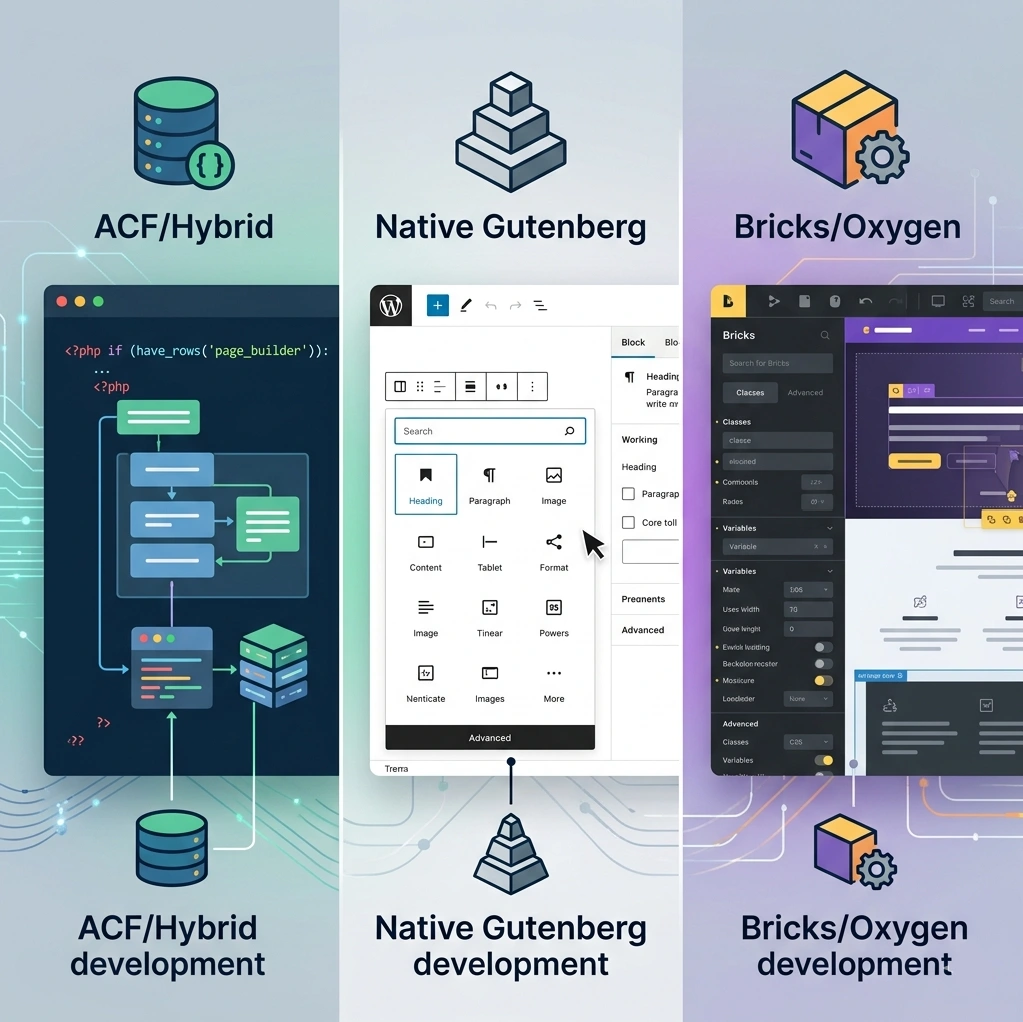
The WordPress ecosystem in 2026 is more diverse than ever. We’ve moved past the “Elementor vs. Divi” era into a much more sophisticated battle: Native Blocks (Gutenberg) vs. Hybrid Solutions (ACF) vs. High-Performance Builders (Bricks/Oxygen). Choosing the wrong one can lead to technical debt, slow loading times, and a nightmare for future updates.
In this guide, we compare the top three contenders for professional WordPress development in 2026 to help you decide which one fits your workflow and your clients’ needs.
1. ACF (Advanced Custom Fields) – The Hybrid Powerhouse
As we discussed in our guide to ACF Flexible Content, this approach is all about data. You define the fields, and the theme controls the output. In 2026, ACF Blocks have bridged the gap, allowing developers to create custom Gutenberg blocks using the familiar ACF API.
- Best for: Custom-made agency websites, high-traffic portals, and clients who need a “locked-down” design they can’t break.
- Pros: Unbeatable performance, 100% clean HTML, and seamless version control (Git).
- Cons: Requires PHP/CSS knowledge; not a “visual” experience for the developer.
2. Native Gutenberg – The Core Experience
Gutenberg has matured significantly. By 2026, Full Site Editing (FSE) is the standard for many. With the introduction of Block Pattern Overrides and improved performance, native blocks are no longer the “clunky” option they used to be.
- Best for: Content-heavy blogs, simple corporate sites, and projects where staying “core-native” is a priority for long-term compatibility.
- Pros: Zero extra plugin overhead, very fast for the end-user, and built-in support from WordPress.
- Cons: Styling can be frustrating without a framework; “block bloat” can still happen if not managed correctly.
3. Bricks / Oxygen – The Performance Builders
Bricks Builder (and to an extent, Oxygen) has taken the professional market by storm. Unlike Elementor, Bricks generates clean code and uses a Vue.js-powered interface that is lightning-fast. It’s a “visual IDE” rather than just a page builder.
- Best for: Freelancers and small agencies who want the speed of a visual builder but refuse to compromise on Core Web Vitals.
- Pros: Class-based styling (CSS variables), incredible development speed, and built-in query loops.
- Cons: Smaller ecosystem than native Gutenberg; slight vendor lock-in (your styles are tied to the builder).
Head-to-Head Comparison Table (2026)
| Feature | ACF / Hybrid | Native Gutenberg | Bricks / Oxygen |
|---|---|---|---|
| Speed (PageSpeed) | ★★★★★ | ★★★★★ | ★★★★☆ |
| Development Time | ★★☆☆☆ (Slow) | ★★★☆☆ (Medium) | ★★★★★ (Fast) |
| Client Safety | ★★★★★ (High) | ★★★☆☆ (Medium) | ★★☆☆☆ (Low) |
| SEO Control | ★★★★★ | ★★★★☆ | ★★★★☆ |
Which One Should You Choose?
Choose ACF if…
You are building a high-end, bespoke site where every millisecond and every tag of HTML matters. It’s the ultimate choice for stability and security. If you care about AI-ready content, ACF gives you the cleanest markup for AI crawlers to read.
Choose Native Gutenberg if…
You want to stay as close to the WordPress core as possible and don’t want to rely on third-party licenses that might change or expire in the future.
Choose Bricks if…
You need to build a complex, beautiful site quickly, but you still want to score 90+ on mobile PageSpeed Insights. It’s the best balance between “visual” and “clean code.”
Gemini’s Expert Tip: In 2026, the trend is moving toward ACF Blocks. They offer the visual editing experience of Gutenberg with the strict data control of ACF. It’s the “Goldilocks” solution for professional WordPress development.
Summary
There is no longer a single “best” way to build a WordPress site. Whether you go with the data-first approach of ACF, the core-first approach of Gutenberg, or the performance-first visual approach of Bricks, the key is to prioritize clean code and user experience. The era of bloated builders is officially over.