


Can AI Predict User Intent? Magic vs. Mathematics in 2026
Introduction: Mind Reading or Data Analysis?
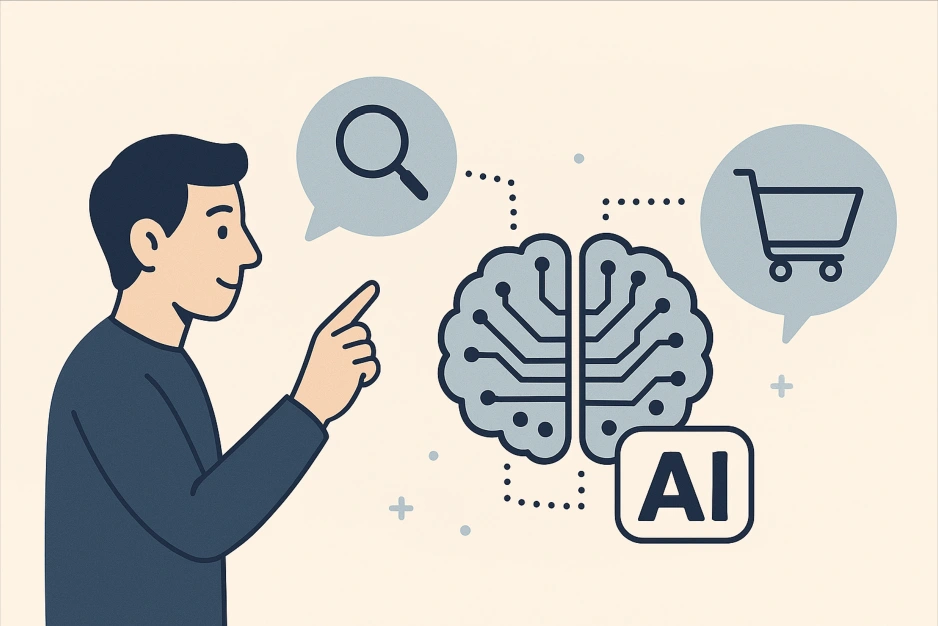
The vision of Artificial Intelligence (AI) reading the thoughts of internet users sounds like science fiction. But are modern algorithms actually able to predict why you are visiting a particular website? The answer isn’t binary: yes, AI can infer user intent with high accuracy, although it isn’t perfect “mind reading.” It is a powerful tool built on the analysis of data and behavioral patterns.
How AI “Sees” Intent: The Key is in the Data
AI doesn’t read minds; it analyzes massive amounts of behavioral and contextual data to build an intent profile. Here is what it focuses on:
1. On-Site Behavior
- Navigation Paths: Which links do you click? In what order do you move through the menu?
- Time on Page: Deep reading of an article vs. a quick skim of an offer.
- Scrolling Depth: How far down do you go? Do you reach the “Contact” or “Pricing” sections?
- Interactions: Clicks on CTA buttons (“Buy Now”, “Download Ebook”), internal searches, or adding items to a cart.
- Retention: How often do you return to the same page?
2. Traffic Source and Context
- Search Queries: Keywords (e.g., “laptop price comparison” vs. “buy gaming laptop”) are invaluable clues.
- Campaign Type: Did you arrive via a brand, product, or informational ad?
- Device: Desktop vs. Mobile – this often indicates different intents (researching vs. quick purchase).
- Time and Date: Is it a lunch break, late evening, a workday, or the weekend?
3. Historical Data and Profiling
- Browsing History: Previous visits to the site and other pages (in compliance with GDPR).
- Demographics and Interests: Provided the user has given explicit consent.
Technologies in Action: Machine Learning and NLP
To transform raw data into an understanding of intent, AI utilizes:
- Machine Learning (ML): Algorithms (such as classification models) learn to recognize patterns connecting behaviors with specific intents based on labeled datasets.
- Natural Language Processing (NLP): Analyzes search phrases, queries, and content to catch linguistic nuances (e.g., intent to buy vs. seeking information).
Practical Applications: Why Do We Use This?
- Real-Time Personalization:
- Informational Intent → more articles, case studies, and FAQs.
- Transactional Intent → promotions, reviews, and “Buy Now” buttons.
- Conversion Rate Optimization (CRO): Identifying friction points where users with high purchase intent drop off.
- Better Ad Targeting: Displaying hyper-relevant ads and remarketing.
- Enhanced Internal Search: Sorting results based on intent (e.g., searching for “iPhone” – showing specs vs. sales offers).
- Proactive Customer Service (Chatbots): Initiating conversations with tailored help (“I see you’re looking at the technical specs. Do you need assistance?”).
Challenges and Limitations: It’s Not Magic
- Data Imperfection: Incognito mode or unusual behavior leads to lower accuracy.
- Interpretation Errors: Does a long time on page mean high interest or just walking away from the computer?
- Ethics and Privacy: The thin line between personalization and surveillance (GDPR compliance is key).
- Statistics vs. Certainty: AI predicts probability; it does not provide 100% certainty.
- Emotional Context: AI struggles to capture hidden motivations or complex emotional nuances.
Summary: Prediction, Not Mind Reading
Can AI predict user intent? Yes, and it’s getting better every day. However, it is sophisticated analysis of behavioral signals and context, not literal mind reading. The key to success is balance:
- Using technology to add value for the user (improving experience).
- Respecting privacy and remaining aware of technical limitations.
The future belongs to AI that predicts intent in an ethical and transparent way, building true trust. It’s not magic—it’s powerful mathematics in the service of utility.